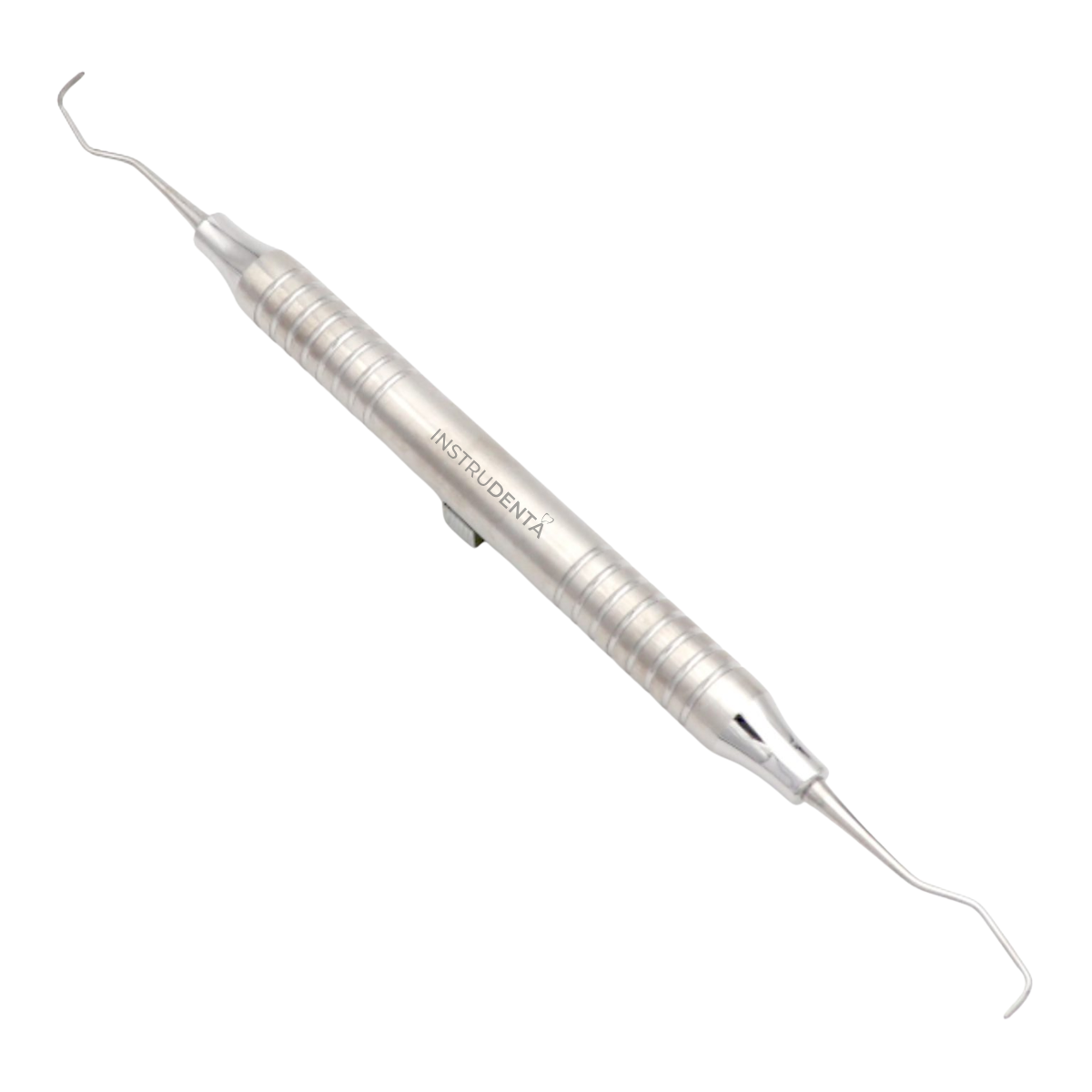
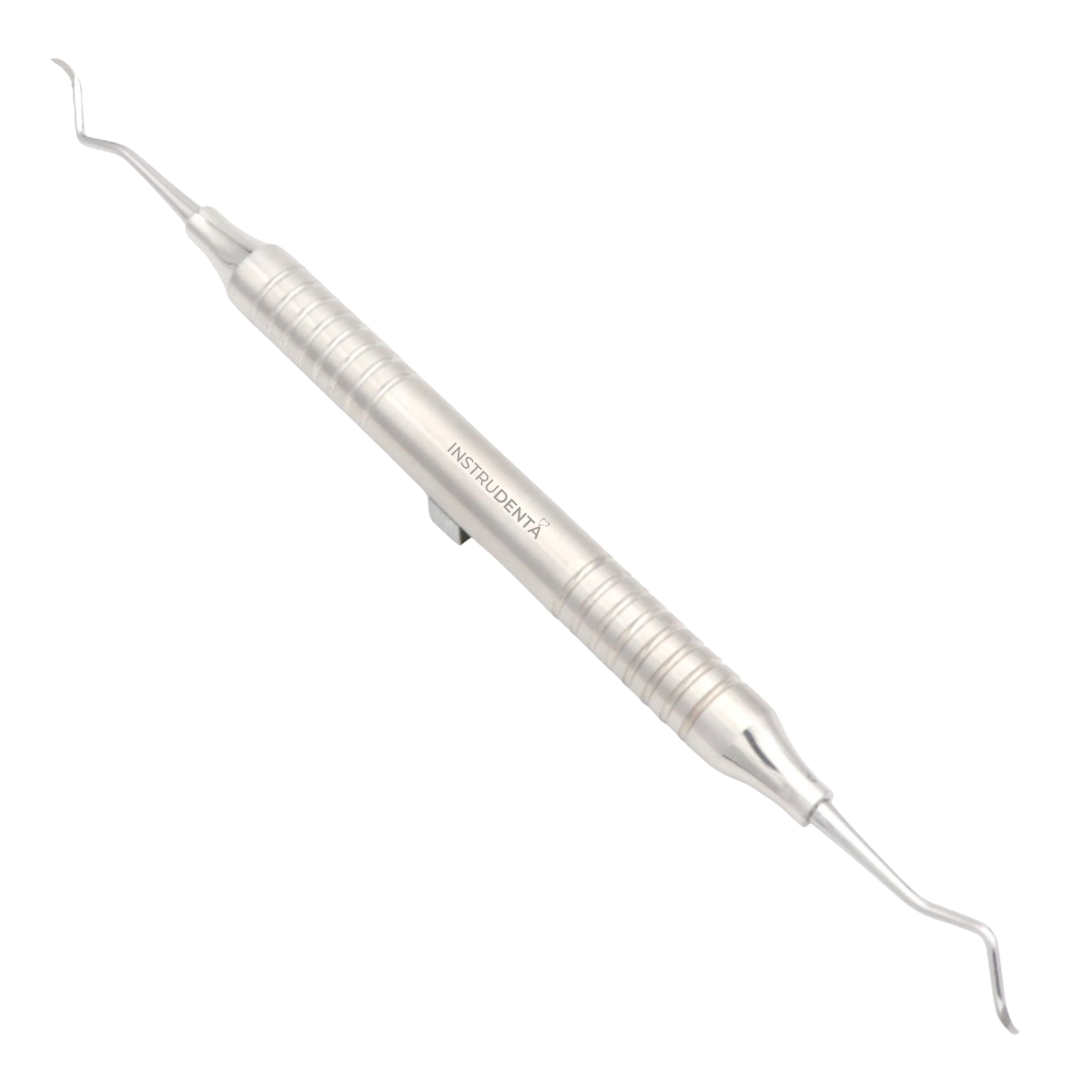
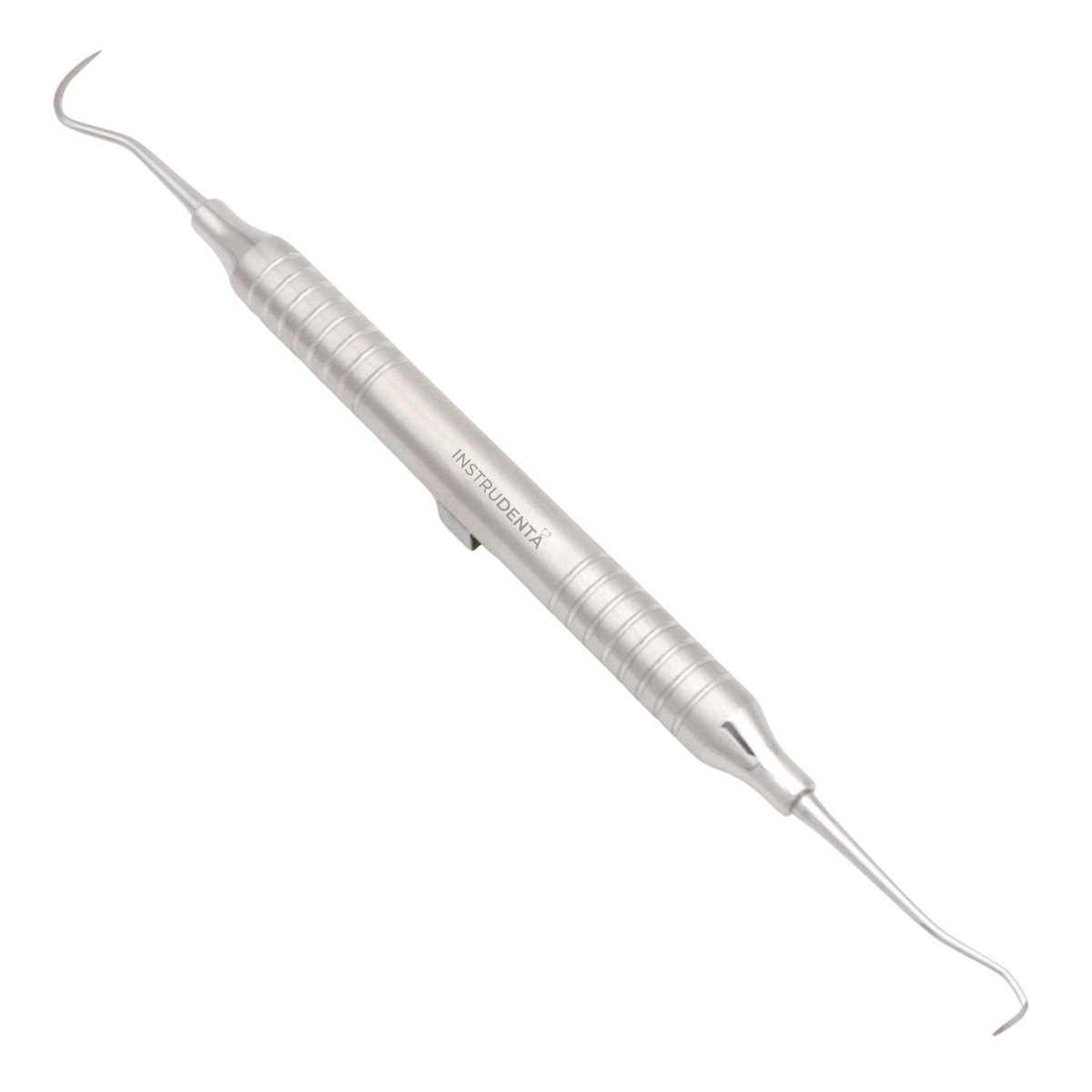
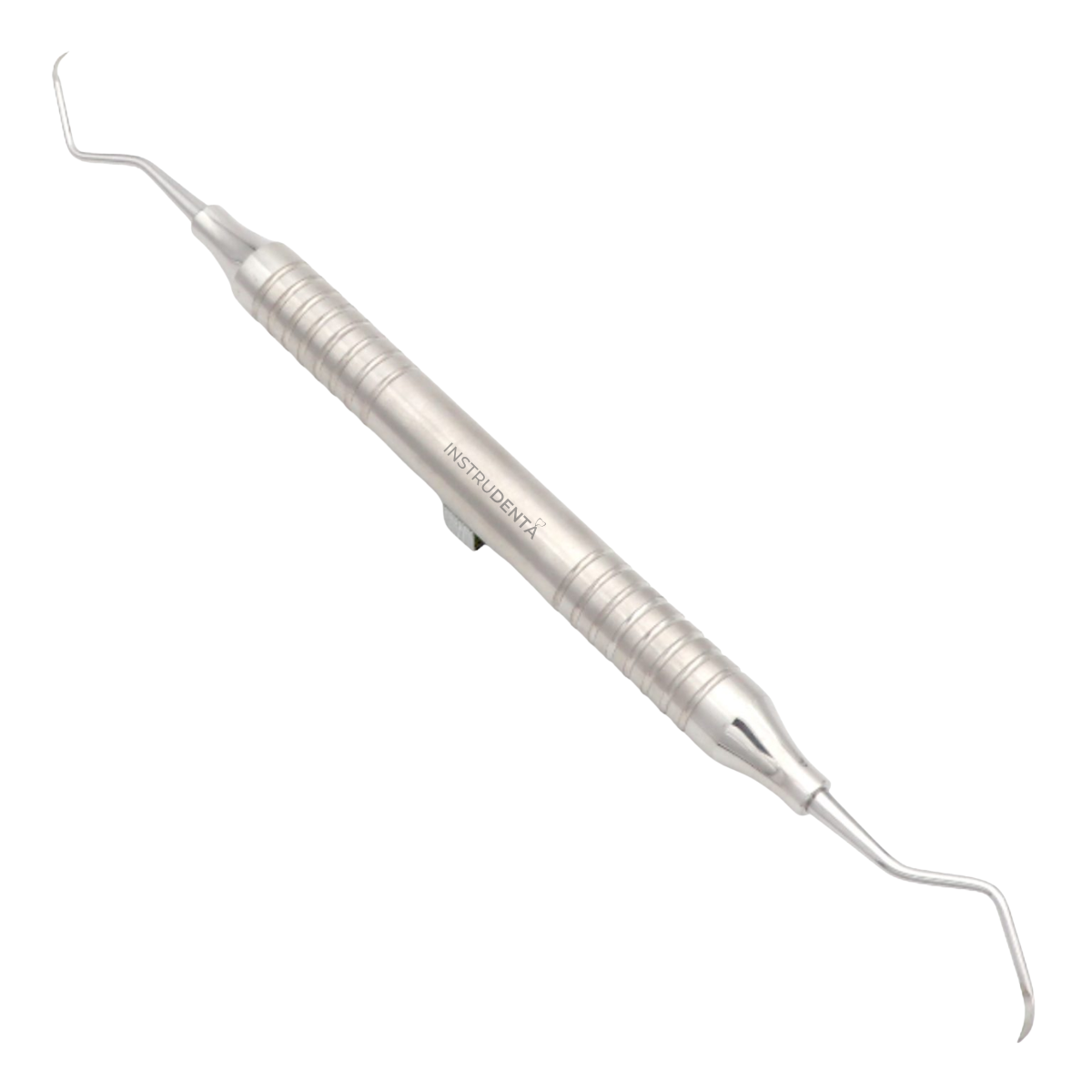
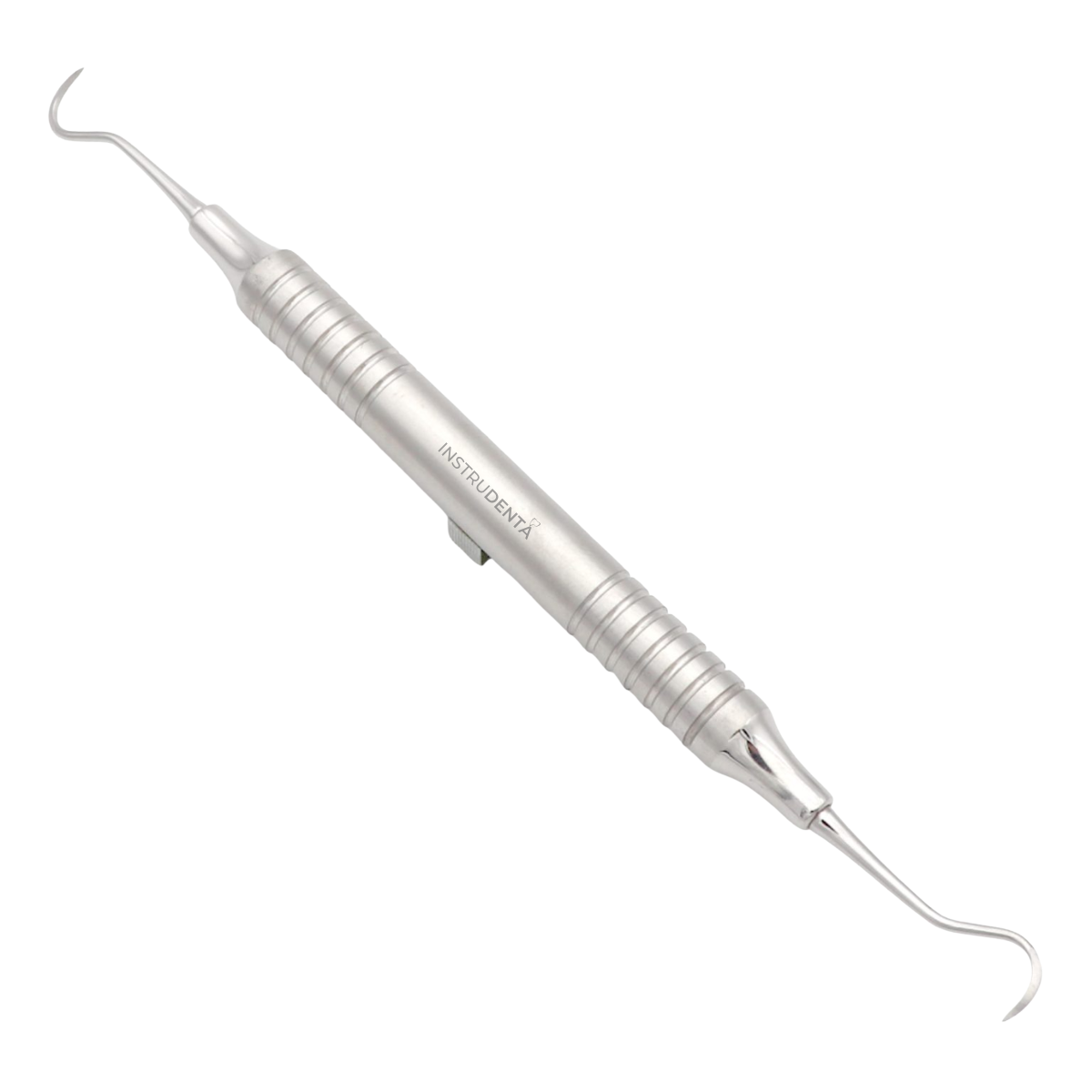
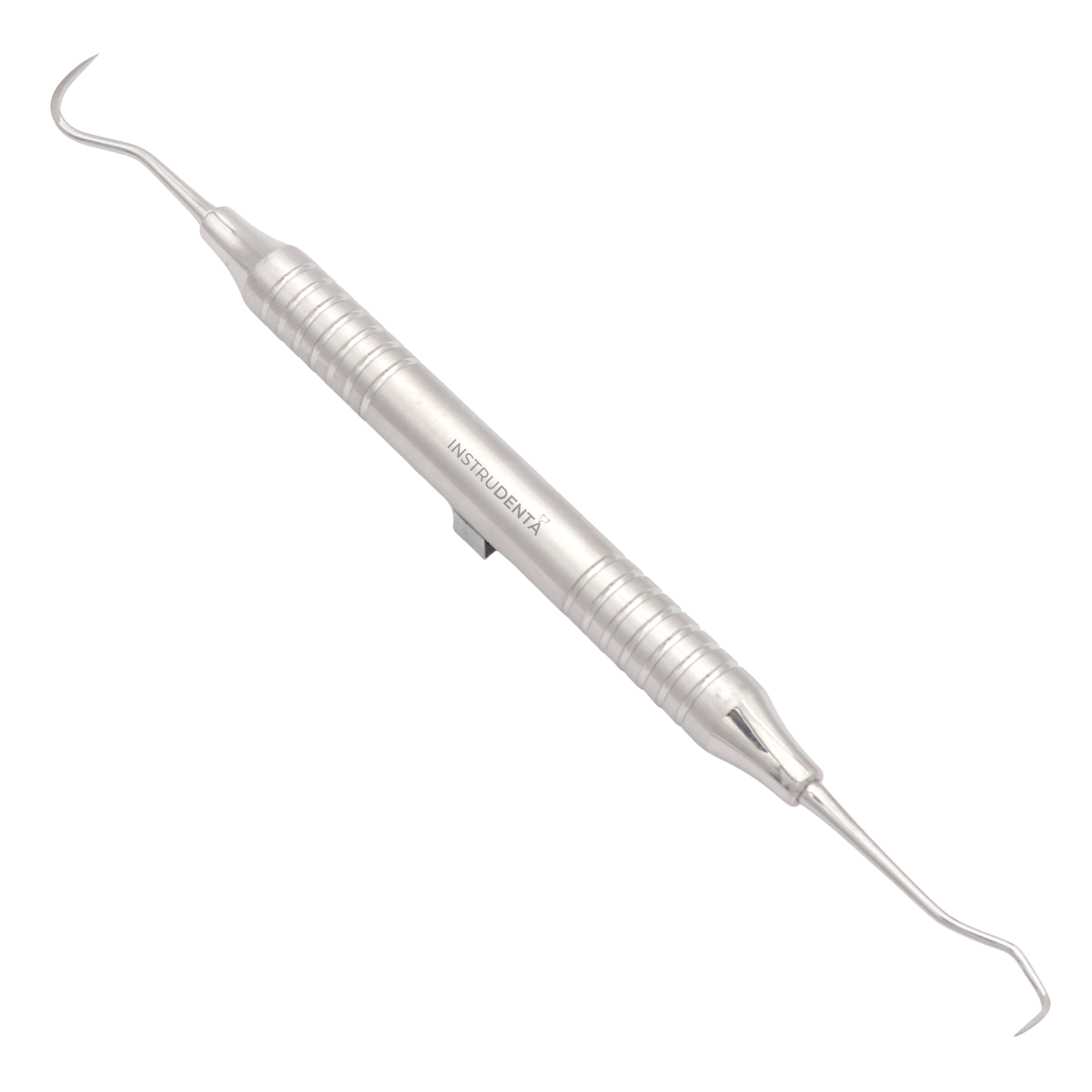
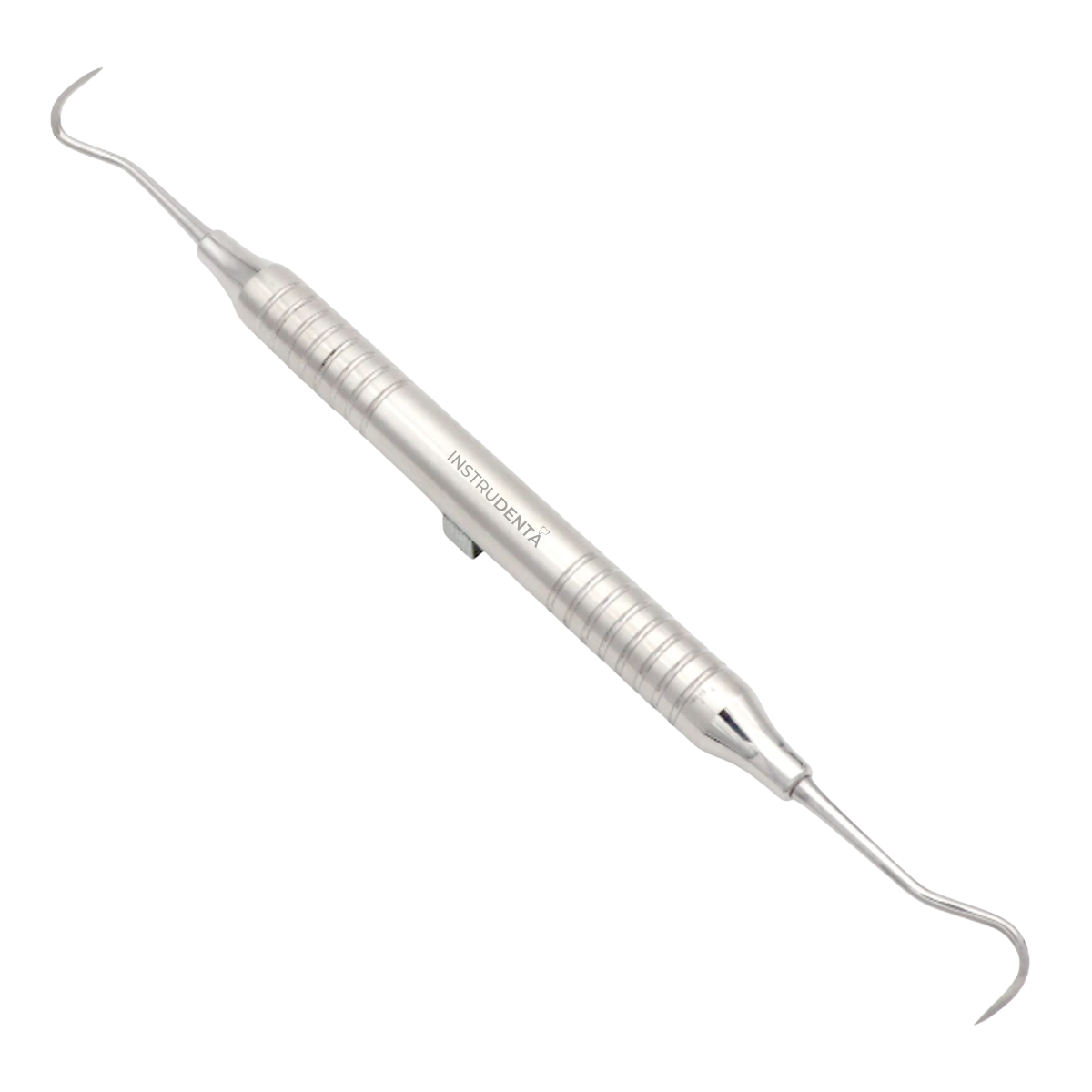
Periodontal Instruments – Dental Scalers & Curettes
Instruments Built Around Edge Retention
Periodontal work lives and dies on tip control. Whether you're doing routine prophylaxis or working sub-gingivally on a periodontal maintenance case, the instrument needs to hold a fine edge and the right angulation, appointment after appointment, without needing constant resharpening.
Scalers, for supra-gingival precision
Dental scalers in this collection are shaped for calculus removal above the gumline, with sickle and universal tip options depending on the surface and access angle you're working. A sharp, well-balanced scaler makes the difference between clearing deposits in one pass and going back over the same spot three times.
Curettes, for the work you can't see
Dental curettes handle what happens below the gumline — root planing, deep pocket debridement, and ongoing periodontal maintenance. Their rounded toe is deliberately designed to protect soft tissue while still cutting through biofilm and sub-gingival calculus effectively.
Why the Steel Matters Here More Than Most Instruments
Periodontal instruments take more repeated micro-stress than almost anything else in a dental kit — constant contact with tooth surfaces, calculus, and repeated sterilization. That's exactly where lower-grade steel shows its weaknesses first: edges round off faster, and tips lose their working angle. Ours are manufactured to hold both edge and shape reliably across the sterilization cycles a busy periodontal caseload puts them through.
Pairs well with our dental extraction instruments for cases moving from periodontal treatment to extraction, or browse the full dental instruments range.
FAQs
How do I know if I need a scaler or a curette for a procedure?
Scalers are generally used for supra-gingival calculus above the gumline, while curettes are designed for sub-gingival work like root planing and deeper periodontal maintenance below the gumline.
Why do periodontal instruments dull faster than other dental tools?
They're in near-constant contact with tooth surfaces and calculus deposits, which puts more repeated stress on the edge than most other instrument types — steel quality has an outsized effect here.
Will these hold an edge through repeated sterilization?
Yes — they're manufactured from surgical-grade stainless steel specifically chosen for edge retention across repeated autoclave cycles.