


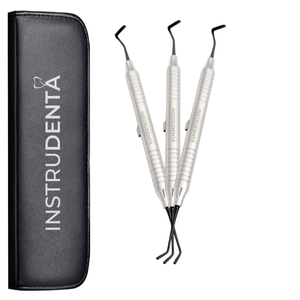
Goldstein No.2 Composite Instrument Pack of 3

Goldstein No.2 Composite Instrument Pack of 3
Goldstein #2 Composite Instrument Pack of 3 for Composite Placement & Advanced Contouring
Goldstein #2 Composite Instrument Pack of 3 is a professional restorative instrument set developed to support accurate composite placement, adaptation, shaping, and finishing during modern restorative procedures. The set includes three identical Goldstein #2 instruments, allowing clinicians to maintain workflow efficiency while benefiting from consistent handling characteristics throughout treatment.
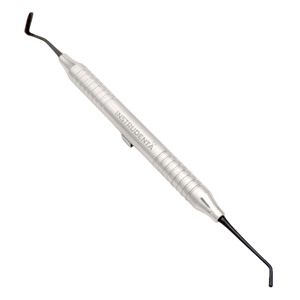
The instrument features a dual-ended working design that combines a 1.75mm rounded plugger tip with a 2.75mm narrow paddle tip. This versatile configuration enables clinicians to condense, adapt, sculpt, and refine composite materials using a single instrument pattern, reducing instrument changes and improving procedural efficiency.
Suitable for Class I, II, and III restorations, the Goldstein #2 provides excellent control during both posterior and anterior composite procedures. The rounded plugger tip assists with material adaptation and condensation, while the narrow paddle facilitates contour development, proximal shaping, and finishing of restorative surfaces.
Each working end is coated with Titanium Nitride (TiNi), helping reduce composite material adhesion while improving wear resistance and visibility within the operative field. The ergonomic 10mm hollow handle enhances balance, tactile feedback, and handling comfort during detailed restorative procedures.
Manufactured from surgical-grade stainless steel, the instruments provide excellent corrosion resistance and long-term durability. Fully autoclavable and reusable, they are designed to maintain reliable clinical performance through repeated sterilization cycles.
Key Features
- Material: Surgical-grade stainless steel
- Coating: Titanium Nitride (TiNi) coated working ends
- Pack Size: 3 identical Goldstein #2 instruments
- Working Tip Design: 1.75mm rounded plugger and 2.75mm narrow paddle
- Clinical Application: Composite placement, adaptation, contouring, and finishing
- Suitable for Class I, II, and III restorations
- Ergonomic 10mm hollow handle for improved control
- Reduced composite sticking during restorative procedures
- Excellent corrosion resistance and durability
- Fully autoclavable and reusable
Frequently Asked Questions
Are all instruments in this pack identical?
Yes. The set contains three identical Goldstein #2 composite instruments for consistent handling and efficient workflow management.
What is the Goldstein #2 instrument used for?
It is used for composite placement, condensation, adaptation, contouring, and finishing during restorative dental procedures.
What are the benefits of the dual-ended design?
The combination of a plugger tip and contouring paddle allows clinicians to perform multiple restorative steps using a single instrument pattern.
Can this instrument be used for anterior and posterior restorations?
Yes. The Goldstein #2 is suitable for Class I, II, and III restorations, making it effective for both anterior and posterior composite procedures.
Bulk Orders & B2B Inquiries
For buying in bulk, you can contact us for B2B business. We supply these instruments at wholesale rates with custom branding and OEM manufacturing options.